
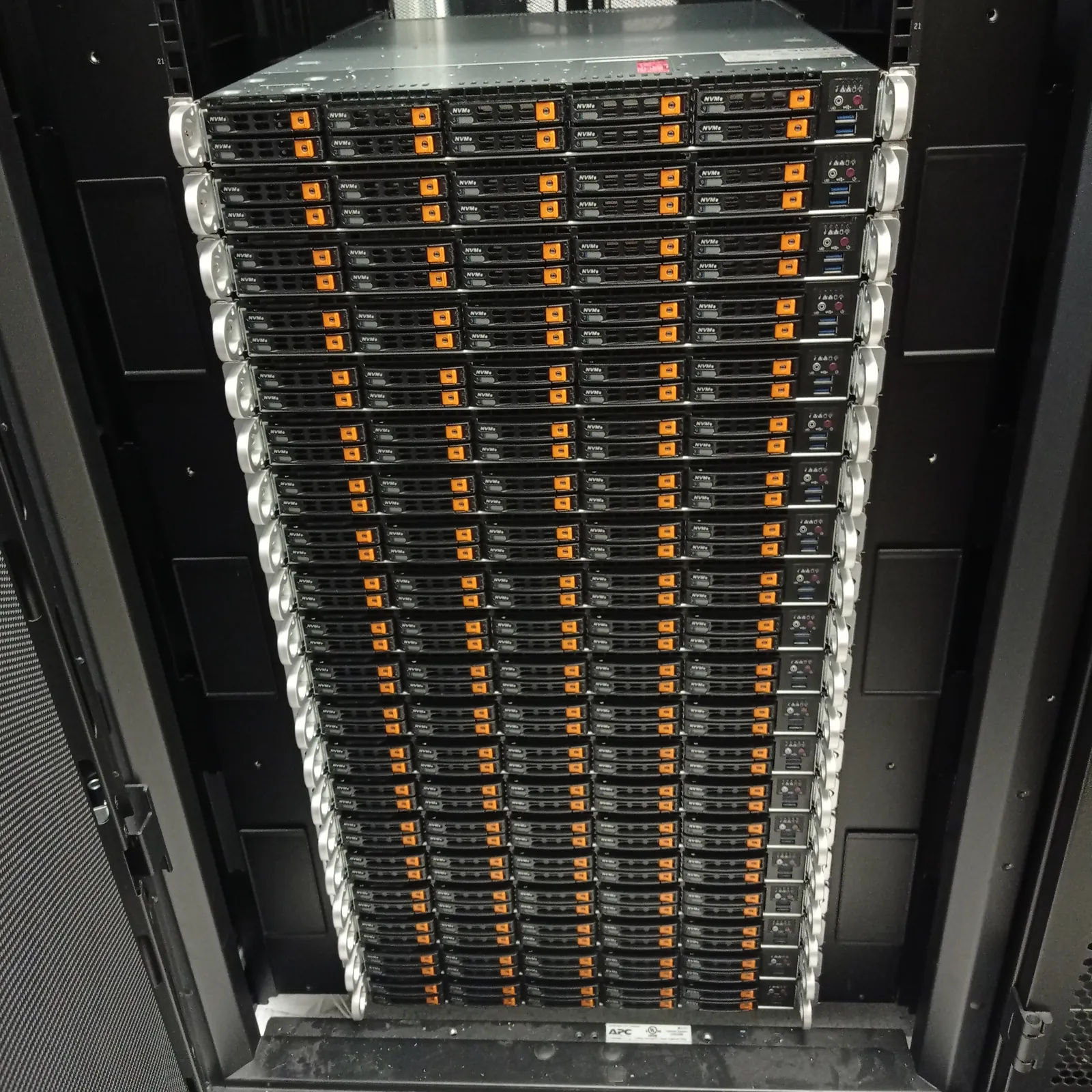
Major server OEMs have shipped Broadcom MegaRAID technology under their own controller names. The enclosure, firmware package and management tool may vary, but the underlying failure states often point back to the same controller, drive, cable and backplane relationships.
An offline array is not a cue to initialise, clear or import whatever the controller offers. First preserve the state, identify the exact hardware and work out whether the fault is logical, physical or both.
Stop before changing the configuration
Do not initialise a virtual drive, clear a foreign configuration or force drives online simply because the option is available. Those actions can overwrite the best evidence of the previous layout or create a second failure on top of the first.
Freeze automated work where practical, record the alert and note every action already taken. If the host still runs, collect controller events and configuration output before rebooting. If the host is down, photograph the controller messages and drive indicators before touching cables or carriers.
Identify the controller and the OEM wrapper
Record the server manufacturer, model, service tag or serial number, controller model, firmware version and management utility. Dell PERC, Lenovo RAID adapters and configurable platforms may use Broadcom technology, but commands and supported recovery actions differ by generation and OEM firmware.
HPE Smart Array belongs to a separate controller family. The same evidence-first approach still applies, but do not assume that MegaRAID commands or state names map directly to it.
Capture the array map
The useful snapshot includes controller health, virtual-drive state, drive-group layout, physical-drive enclosure and slot, foreign state, media errors, predictive failures and recent controller events. Save the output outside the affected array.
Match software slot numbers to the physical chassis before removing a drive. A label, enclosure map or previous handover record may expose a mismatch between the expected slot and the carrier someone is about to pull.
- Server and controller identity
- Virtual-drive and drive-group state
- Physical-drive enclosure, slot and serial number
- Foreign, missing, failed and rebuild states
- Controller events and the last known good time
- Recent maintenance, power or cabling changes
Inspect the physical path onsite
A controller fault may actually sit in the SAS or SATA path, expander, backplane, power feed or drive seating. Broadcom's own guidance for a MegaRAID communication failure points engineers toward controller logs, physical drive health and backplane connectivity rather than software-only troubleshooting.
An onsite engineer can check LEDs, carrier seating, controller seating, cache or protection modules, internal cables and backplane power. Each action should preserve the slot order and starting state.
Treat foreign configuration as evidence
Foreign does not automatically mean safe to import, and it does not automatically mean safe to clear. It tells you that the controller sees configuration metadata that does not match its current view. Preview the foreign layout where the supported utility allows it, then compare it with the known array map.
If several drives changed state together, look for a shared path or power event before blaming several disks at once. If an import would create an inconsistent array, stop. That is the point to escalate, not to try another command at random.
Choose recovery, rebuild or replacement deliberately
A normal rebuild may be suitable when the surviving members are healthy and the failed member is unambiguous. It may be the wrong move when several drives have media errors, the array map is uncertain, the controller metadata conflicts or the data has no current backup.
Uplink can attend the London facility, preserve the evidence, inspect the hardware and work with the remote owner on the next step. If the safest route is imaging or specialist data recovery, we will say so before a destructive change is made.
References
Facility names and addresses can change. Confirm the current access record with the operator before booking travel or sending parts.